PROCUREMENT
Influencer Marketing vs. Affiliate Marketing: Which One Is Right for Your Brand?
Talk to us

Influencer Marketing vs. Affiliate Marketing: Which One Is Right for Your Brand?

Influencer Marketing Agency
Written By: Avanii
Lead Editor
Avanii
Lead Editor
Avanii Thakur is a social media and influencer marketing writer at Socially Powerful with a Master’s in Marketing and Brand Management. She combines academic training with experience in personal relations, influencer marketing campaigns, and editorial thought leadership to write content that cuts through the digital noise. Avanii develops trend-driven blogs, case studies, playbooks, and thought leadership pieces at Socially Powerful across industries like beauty, fashion, gaming, FMCG, and tech.
Reviewed By: Majid
Founder/CEO
Majid
Founder/CEO
Majid Bahi is a professional editor and content reviewer, who is known for his subject matter expertise in social and influencer marketing. He earned a Doctorate (EngD) in Bioelectronics from the University of Southampton, an academic achievement that equipped him with strong analytical and data-driven skills. At Socially Powerful, Majid serves as both Global CEO and an editor/reviewer, ensuring that the agency’s published insights meet the highest standards of quality
Edited By: James
Founder/Industry Expert
James
Founder/Industry Expert
James Hacking is a globally recognized influencer marketing expert, entrepreneur, content creator, and the founder of Socially Powerful, a leading social-first marketing agency. He is an influencer marketing industry expert who has a creative background as a content creator with nearly two decades of marketing and business experience.
Published Date: October 16th, 2025
Last Updated: November 10th, 2025
19 min read

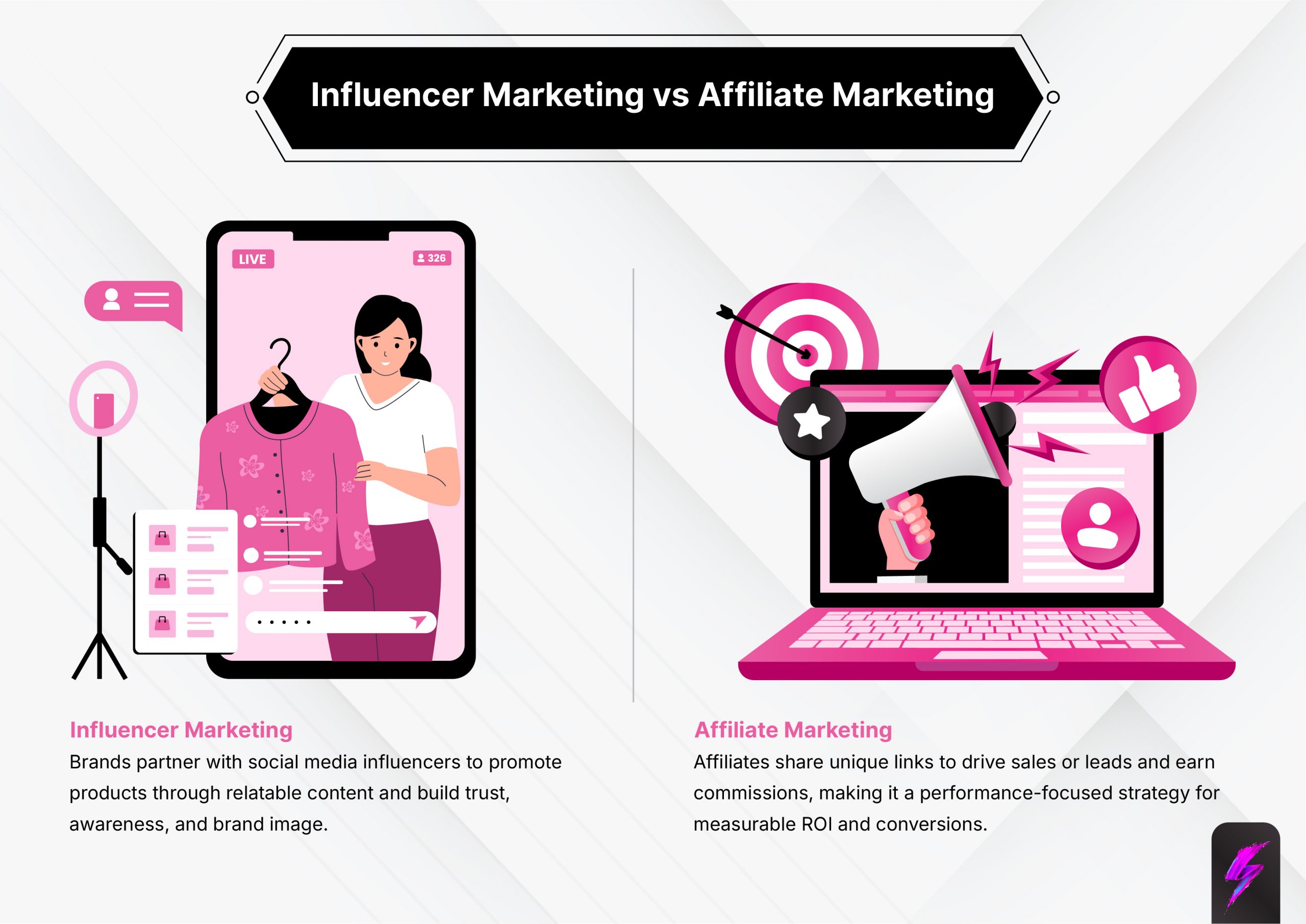
Influencer marketing is a marketing strategy in which brands use influencers with a strong presence on social media to promote their products and services. Affiliate marketing is a performance-based marketing model in which affiliates promote the products or services of a brand using unique links and earn commissions on sales, clicks, or leads.

Influencer marketing is different from affiliate marketing as it focuses on creating an emotional connection between the brand and the customer, while affiliate marketing is based on generating direct sales and conversions.

Choosing influencer or affiliate marketing depends on the goals of your brand. Influencer marketing is better if the brand wants to build awareness, credibility, and a strong online presence, and affiliate marketing is suitable if the target is to increase sales, measure performance, and optimize ROI.
What Is Influencer Marketing?

Influencer Marketing vs Affiliate Marketing

Influencer marketing is a strategy in which brands collaborate with individuals who have a large following on social media platforms like Instagram, YouTube, and TikTok. Influencers create sponsored content like reels, posts, and live streams to help the brand connect with its target audience.

Influencers promote businesses by sharing honest reviews, tutorials, unboxings, and creative storytelling that encourage their audience to interact with the brand through likes, comments, shares, and saves. Their ability to influence the purchasing decisions of the people helps brands achieve higher visibility and increase brand awareness.

What Is Affiliate Marketing?

Affiliate marketing is a performance-based marketing strategy in which businesses promote the products or services of a brand using third-party websites known as affiliates.

The affiliate earns a commission when a customer clicks on the link and completes a desired action, such as making a purchase or filling out a lead form. The spending on affiliate marketing increased to $9.56 billion in the United States of America in 2023, and it is expected to grow $12 billion by 2025.

What Is the Difference Between Influencer Marketing and Affiliate Marketing?

These differences between influencer and affiliate marketing are explained below.

  • Approach: Influencer marketing is based on storytelling and relatable content, but affiliate marketing depends on using discount codes and unique affiliate links.
  • Goals: Influencer marketing focuses on increasing brand exposure and awareness, while affiliate marketing focuses on revenue and conversions.
  • Compensation: Influencer marketing costs depend on the per-post rates of an influencer, while in affiliate marketing, the compensation is only based on commissions.
  • Measurement of ROI: Influencer marketing measures success through reach, impressions, and engagement rates, and affiliate marketing tracks ROI, conversions, and revenue generated.

What Are the Pros and Cons of Influencer Marketing?

The pros of influencer marketing include brand awareness and credibility, a relevant audience, increased reach, working across multiple platforms, and high engagement and reliability. The cons of influencer marketing include impact on brand reputation, high risk, cost variability, hard to measure ROI, and authenticity concerns.

Pros of Influencer Marketing

The pros of influencer marketing are given below.
  • Brand Awareness and Credibility: Influencer marketing improves the visibility of the brand and builds trust through the follower base of the influencers.
  • Relevant Audience: Influencers have a highly targeted and engaged following, which allows brands to connect with people who are genuinely interested in their products or services.
  • Works Across Multiple Platforms: Influencer marketing is versatile and is executed across platforms like Instagram, TikTok, and YouTube.
  • High Engagement and Relatability: Influencer marketing has higher engagement rates because influencers have followers who trust their recommendations and feel a personal connection.

Cons of Influencer Marketing

The cons of influencer marketing are given below.

  • Impact on Brand Reputation: The reputation of the brand is negatively impacted if an influencer is involved in a controversy, because their actions reflect on the brands they endorse.
  • High Risk: The effectiveness of influencer marketing is unpredictable, so the campaign will not yield the expected results if the audience of the influencer does not resonate with the brand.
  • Cost Variability: The fee of the influencer varies greatly depending on the reach, engagement, and industry, which makes budgeting for campaigns difficult.
  • Harder to Measure ROI: Measuring the ROI in influencer marketing is less clear-cut because it focuses on long-term brand building.
  • Authenticity Concerns: Overly promotional and forced influencer content does not come across as authentic.

What Are the Pros and Cons of Affiliate Marketing?

Cons of affiliate  Marketing

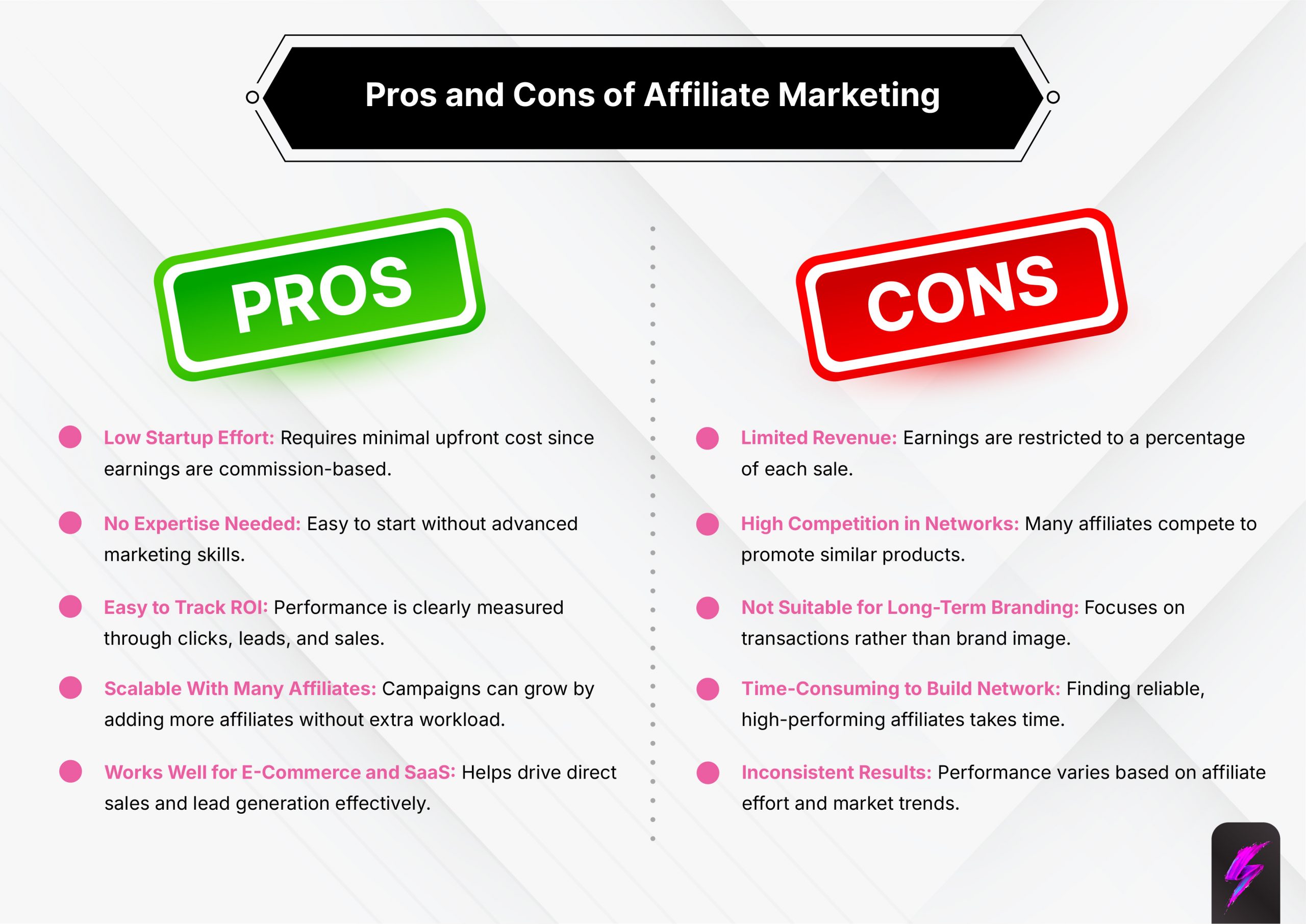
The pros of affiliate marketing include low startup effort, no expertise needed, easy to track ROI, scalability with many affiliates, and it works well for E-commerce and SaaS. The cons of affiliate marketing include limited revenue, high competition in affiliate networks, not working for long-term campaigns, being time-consuming, and inconsistent results.

Pros of Affiliate Marketing

The pros of affiliate marketing are given below.
  • Low Startup Effort: Affiliate marketing requires minimal upfront investment because the strategy is commission-based.
  • No Expertise Needed: Affiliate marketing does not require extensive marketing knowledge to begin, which makes it accessible for beginners.
  • Easy to Track ROI: Affiliate marketing offers clear performance tracking based on specific actions like sales, clicks, and leads through conversion tracking tools.
  • Scalable With Many Affiliates: Affiliate marketing helps to grow marketing efforts by partnering with multiple affiliates to scale campaigns without increasing the workload.
  • Works Well for E-Commerce and SaaS: Affiliate marketing is effective for e-commerce and SaaS businesses because affiliates drive direct sales and generate leads through their networks.

Cons of Affiliate Marketing

The cons of affiliate marketing are given below.

  • Limited Revenue: Affiliates earn only a percentage of the sales they generate, which limits the revenue as compared to other models of marketing.
  • High Competition in Affiliate Networks: Affiliate networks are crowded with competitors, which makes it challenging to stand out and drive sales.
  • Not Works for Long-term Campaigns: Affiliate marketing is not the best choice for long-term brand-building campaigns that require more in-depth engagement.
  • Time-consuming: Developing a network of reliable, high-performing affiliates takes time and effort when starting from scratch.
  • Results are Inconsistent: Affiliate marketing is based on performance, and the results vary depending on factors like affiliate effort, audience engagement, and market trends.

How Does Influencer Marketing Work for Your Brand?

How Does Influencer Marketing Work for Your Brand

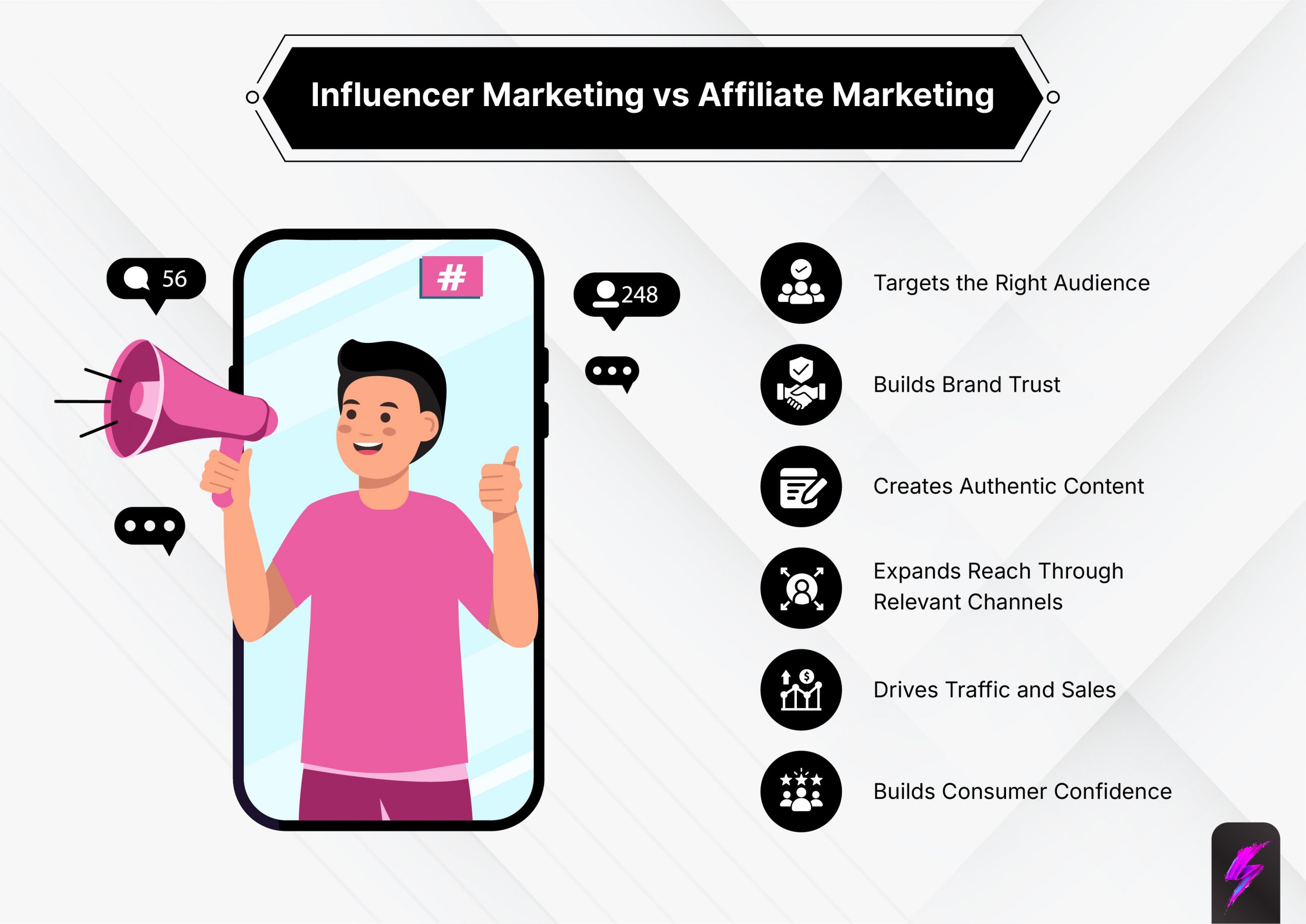
Influencer marketing works for your brand by targeting the right audience, building trust, creating authentic content, expanding reach through relevant channels, driving traffic and sales, and building consumer confidence. These are discussed in detail below.
  1. Targets the Right Audience: Influencer marketing makes sure that the brand message reaches the audience with the same interests, preferences, and values.
  2. Builds Brand Trust: People trust influencer recommendations more than traditional ads, which helps the brand gain trust and credibility.
  3. Creates Authentic Content: Influencers create relatable and creative content that naturally integrates the brand to make promotions feel genuine.
  4. Expands Reach Through Relevant Channels: Influencer marketing increases the brand’s visibility across multiple social media platforms like Instagram, YouTube, and TikTok.
  5. Drives Traffic and Sales: Influencer marketing campaigns motivate the followers to visit the brand’s website to turn brand awareness into sales.
  6. Builds Consumer Confidence: Positive product reviews from influencers make customers feel more confident about choosing a brand.

How Does Affiliate Marketing Work for Your Brand?

How Does Affiliate Marketing Work for Your Brand

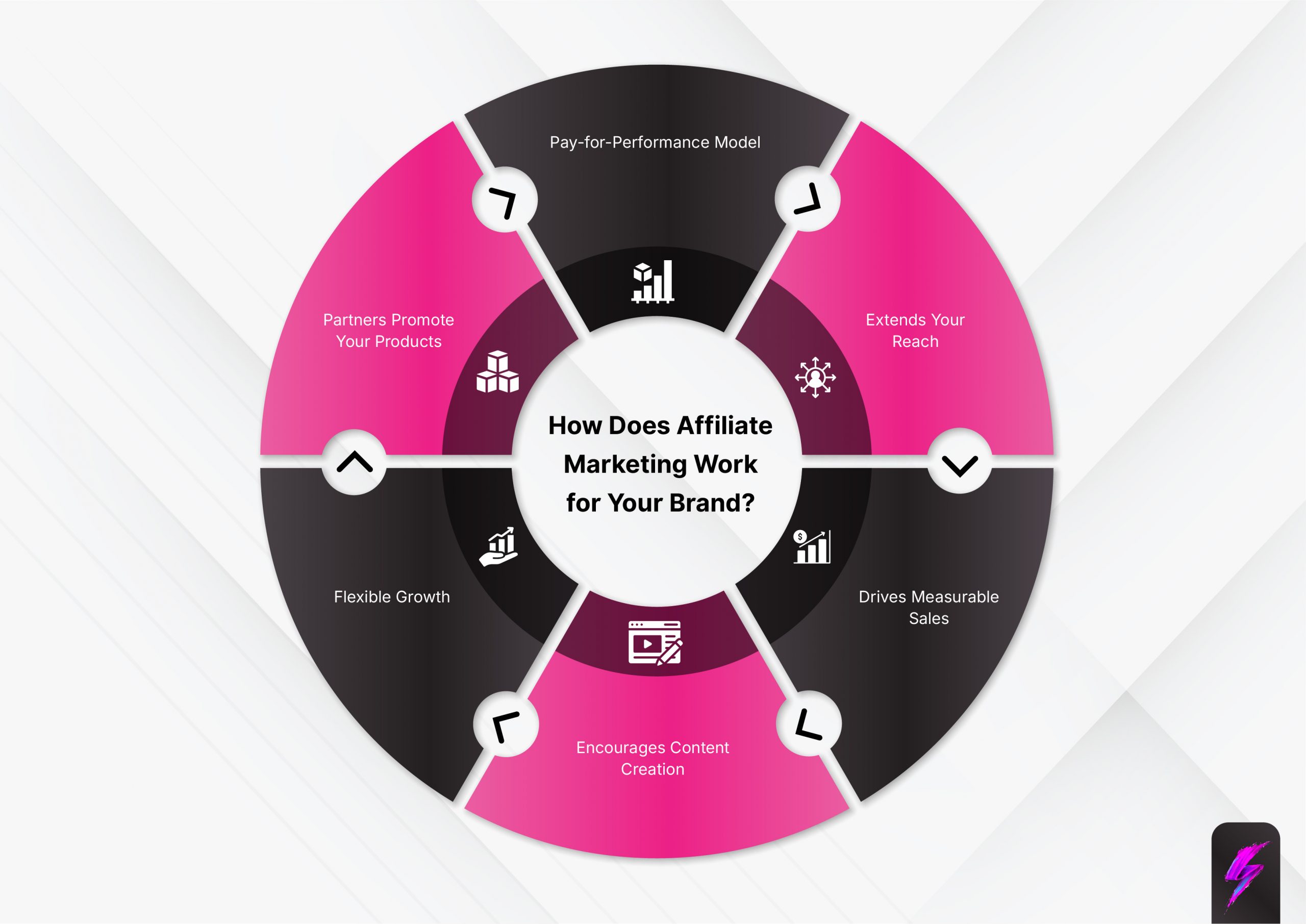
Affiliate marketing works for your brands by partners promoting your products, a pay-for-performance model, extending your reach, driving measurable sales, encouraging content creation, and has flexible growth. These are discussed in detail below.

  1. Partners Promote Your Products: Affiliate marketers promote your products or services through unique affiliate links and share them with their audiences across channels like websites, blogs, and social media.
  2. Pay-for-Performance Model: Affiliates are paid when they generate a sale, click, or lead, which makes it a cost-effective strategy where payments are tied directly to performance and results.
  3. Extends Your Reach: Partnering with affiliates provides the brand with exposure to new audiences and increases the reach without additional marketing effort from your side.
  4. Drives Measurable Sales: Affiliate marketing offers clear tracking of sales and leads generated through affiliate links to measure the direct impact and ROI of each campaign.
  5. Encourages Content Creation: Affiliates create and share content that highlights the products, from blog posts to videos, which boosts the visibility of the brand through authentic and engaging promotions.
  6. Flexible Growth: Affiliate marketing offers scalability so brands are able to grow gradually and adjust their brand strategy as needed.

How Do You Determine ROI in Influencer vs Affiliate Marketing?

You can determine ROI in influencer marketing and affiliate marketing by different approaches due to the nature of each strategy. Metrics like reach, impressions, engagement, brand mentions, and sentiment analysis help measure the effectiveness of influencer marketing campaigns your brand received from the audience of the influencer. ROI is easier to calculate in affiliate marketing since it is based on actual performance, like clicks, sales, conversions, and revenue generated, which are used to track the performance of affiliates.

How Can Brands Use Influencer and Affiliate Marketing Together?

Brands can use influencer and affiliate marketing together by combining the unique affiliate links with influencer content for tracking and paying for sales-driven actions. Influencers inspire audiences and also encourage purchasing decisions through personalized discount codes and co-branded landing pages. Influencer marketing focuses on building brand awareness and trust through creative storytelling, and affiliate marketing provides measurable performance and sales.

What are Affiliate Programs for Influencers?

Affiliate programs for influencers promote products or services in exchange for a commission on sales, clicks, or leads generated through their unique affiliate links. Some of the best affiliate programs are the Amazon Associate Program and the CJ Affiliate.

The Amazon Associates Program allows influencers to earn commissions by promoting any product on Amazon. Commission rates vary from 1% to 20%, and affiliates earn commissions on all purchases made within 24 hours of clicking their link. CJ Affiliate is a well-established affiliate program that offers influencers access to brands like Verizon, TripAdvisor, and Walgreens at commission rates ranging from 3% to 50%.

Which Marketing Strategy Is Right for Your Brand: Influencer or Affiliate?

Affiliate marketing is a performance-based strategy that is right for your brand if you want to drive immediate sales and conversions. Influencer marketing is best for your brand if you want long-term brand building, as it focuses on increasing awareness and engagement, which leads to more sales.

Affiliate marketing is highly effective for e-commerce or SaaS brands where results can be directly tracked. Influencer marketing builds a strong, relatable brand image over time to indirectly drive conversions.

Businesses combine both strategies to build credibility through influencers while also driving immediate sales through affiliate links. Brands define their goal, like broad awareness or direct sales conversions, and then select influencer marketing for storytelling and long-term brand growth, and affiliate marketing for measurable, performance-based sales with lower upfront costs.

How to Start an Influencer Marketing Campaign for Your Brand?

To start an influencer marketing campaign, follow the steps given below.

  1. Define Target Audience and Campaign Goals: Brands need to identify their customers and their interests, and where they spend time online. Brands then set clear campaign objectives such as increasing brand awareness, driving sales, or building engagement.
  2. Select the Right Influencer Tier: Brands choose influencers according to audience size, relevance, and alignment with campaign goals. The decision depends on budget and desired impact, whether partnering with nano, micro, macro, or mega influencers.
  3. Outreach and Negotiate Deliverables: Brands approach suitable influencers with a personalized pitch that outlines expectations and content types such as posts, videos, or stories, and negotiate compensation and terms that align with mutual benefit.
  4. Launch Campaign: Brands provide influencers with required materials like product samples and campaign guidelines once agreements are finalized to ensure authentic, engaging content creation before launching the campaign.
  5. Track Results: Brands need to track campaign performance through key metrics such as engagement rate, website traffic, and conversions to evaluate their effectiveness and guide future influencer marketing strategies.

How to Start an Affiliate Marketing Campaign for Your Brand?

Follow the steps described below to start an affiliate marketing campaign for your brand.

  1. Define Commission Model: Brands determine a commission structure, such as CPA, CPS, or CPL, that aligns with business objectives and motivates affiliates through fair, performance-based rewards.
  2. Choose an Affiliate Platform: Brands select a management platform like Amazon Associates, ShareASale, or Impact to handle tracking, payments, onboarding, and campaign analytics.
  3. Recruit Affiliates: Brands identify affiliates relevant to their niche and reach out directly or promote their program through affiliate networks and brand websites to attract qualified partners.
  4. Provide Creatives and Tracking Links: Brands supply affiliates with branded creatives and unique tracking links to maintain consistency, ensure accurate performance tracking, and enhance promotional impact.
  5. Monitor Performance: Brands use platform dashboards and key metrics to evaluate campaign success, optimize strategies, and reward high-performing affiliates for sustained growth.

Which Is More Cost-Effective: Influencer Marketing or Affiliate Marketing?

Affiliate marketing is more cost-effective than influencer marketing because it has a pay-for-performance model, as the affiliates are only paid when they generate sales or leads. This makes sure that the marketing budget is spent efficiently as costs are directly tied to measurable results. Affiliate marketing has no upfront costs, so it is a better choice for brands looking to minimize risk and pay for actual performance.

Are Affiliate and Influencer Marketing the Same?

No, affiliate and influencer marketing are not the same because affiliate marketing drives sales, clicks, or leads through unique affiliate links, and influencers promote products or services to their audience through sponsored content.

Affiliate marketing is a performance-based model, while influencer marketing is more focused on brand awareness, which establishes an emotional connection and engagement.

Are Social Media Marketing and Affiliate Marketing the Same?

No, social media marketing and affiliate marketing are not the same in terms of their goal, methods, and results. Social media marketing involves using platforms like Instagram, Facebook, Twitter, and TikTok to promote a brand, engage with an audience, and drive brand awareness.

Affiliate marketing is a strategy in which affiliates promote a brand’s products or services through affiliate links and earn a commission for each sale, click, or lead they generate.

What Is the Difference Between Amazon Influencer and Affiliate Programs?

The difference between the Amazon Influencer and Affiliate Programs is the platform on which the content is posted. The Amazon Influencer program is an on-site program for people with a social media following to create product review videos that will appear on a dedicated page on Amazon.

The Amazon Affiliate Program uses unique links on its personal blogs or social media platforms to drive external traffic to Amazon, which helps them earn commission.

What is the Difference Between Digital Marketing and Affiliate Marketing?

The difference between digital marketing and affiliate marketing lies in their scope and structure. Digital marketing is a broad field that includes multiple channels such as SEO, social media, email, and paid advertising to promote brands.

Affiliate marketing is a specific, performance-based model within digital marketing where affiliates earn commissions by driving sales or conversions for a business.

What is the Difference Between Affiliate Marketing and E-commerce?

The difference between affiliate marketing and e-commerce is the ownership and revenue structure. Affiliate marketing promotes other brands’ products or services for a commission on each sale or conversion, while e-commerce involves selling your own products directly to consumers through an online store.

Are AI Influencers Effective for Marketing?

Yes, AI influencers are effective for marketing because they offer benefits like being scalable, always on-brand, and available 24/7, which makes them ideal for brands looking for consistent, high-frequency content production. AI influencers have some limitations, like they are not able to connect with audiences who value human flaws and imperfections.

Is Influencer Marketing B2B or B2C?

Influencer marketing operates in both the B2B and B2C sectors, depending on the audience and platform. Brands collaborate with thought leaders, industry experts, and LinkedIn creators in B2B influencer marketing to share insights, host webinars, or demonstrate SaaS products that build professional credibility and generate qualified leads.

Brands partner with creators on Instagram, TikTok, and YouTube in B2C influencer marketing to produce lifestyle content that enhances visibility, drives engagement, and converts audiences through relatable storytelling and emotional appeal.

Does Influencer Marketing Work for B2B Companies?

Yes, influencer marketing works for B2B companies because it helps to build credibility, trust, and authority within a specific sector. Industries like SaaS and tech use influencer marketing to provide valuable insights, share in-depth product demos, host webinars, and create case studies.


Work With Us
About the Author
Avanii
Social Media and Influencer Marketing Writer
Avanii Thakur is a social media and influencer marketing writer at Socially Powerful with a Master’s in Marketing and Brand Management. She combines academic training with experience in personal relations, influencer marketing campaigns, and editorial thought leadership to write content that cuts through the digital noise. Avanii develops trend-driven blogs, case studies, playbooks, and thought leadership pieces at Socially Powerful across industries like beauty, fashion, gaming, FMCG, and tech.
Read More
logo name
logo name
logo name
logo name
logo name
logo name
logo name
logo name
logo name
projects
Check out some of our related case studies
card image
logo image
case study

30M

IMPRESSIONS

15%

UPLIFT IN SALES

17M

REACH

card image
logo image
case study

70M+

IMPRESSIONS

500+

COLLABORATIONS

SOLD OUT

PRODUCT LINES

card image
logo image
case study

486%

FOLLOWERS

28M

MENTIONS

13M

VIEWS

card image
logo image
case study

35M

VIEWS

3M

ENGAGEMENTS

50+

CREATORS
card image
logo image
case study

32M

VIEWS

+400K

NEW FOLLOWERS

2M

LIKES

latest posts
Social And Influencer Marketing News Related Posts
post image
post icon

Nov 19, 2025

Influencer Marketing Agency

22 Best Influencer Marketing Courses in 2025
Read more
post image
post icon

Nov 18, 2025

Influencer Marketing Agency

10 Best Influencer Database Software to Choose
Read more
post image
post icon

Nov 16, 2025

Influencer Marketing Agency

31 Best Influencer Marketing Agency for Luxury Brands in 2025
Read more
post image
post icon

Nov 16, 2025

Influencer Marketing Agency

How Does Influencer Marketing Increase Brand Awareness In 2025
Read more
post image
post icon

Nov 15, 2025

Influencer Marketing Agency

17 Essential Influencer Analytics Tools For 2025: A Complete Guide To Maximize Your Campaign ROI
Read more
post image
post icon

Nov 15, 2025

Influencer Marketing Agency

21 Top Digital Marketing Influencers in 2025
Read more
VIEW ALL BLOG POSTS chevron icon
Get in touch

We'll show you how to start powerful conversation, drive social engagement, build your brand, hit sales targets or meet other goals you have, wherever you are in the world.

Work with us chevron icon