Written By:
Ella
Writing Team
 PROCUREMENT



There’s no shortage of influencers to choose from right now. If anything, there’s too many, which makes finding the right one surprisingly hard. Left to its own devices, your feed will keep showing you the same handful of already-popular names on repeat, whether or not they’re actually the best fit for what you’re doing.
If you’re a marketer looking for the right partner, just know it gets easier once you know where to look. This guide breaks down practical ways to find influencers across Instagram, TikTok, and YouTube, with tips built for however you’re using them.
From strategy to execution, we deliver guaranteed results that maximize growth for your brand.
>> We grow brands locally, or help them with worldwide growth.
>> We guarantee results. If we don't hit agreed KPI's you don't pay us. Simple.

The main steps to choosing social influencers for your brand are:
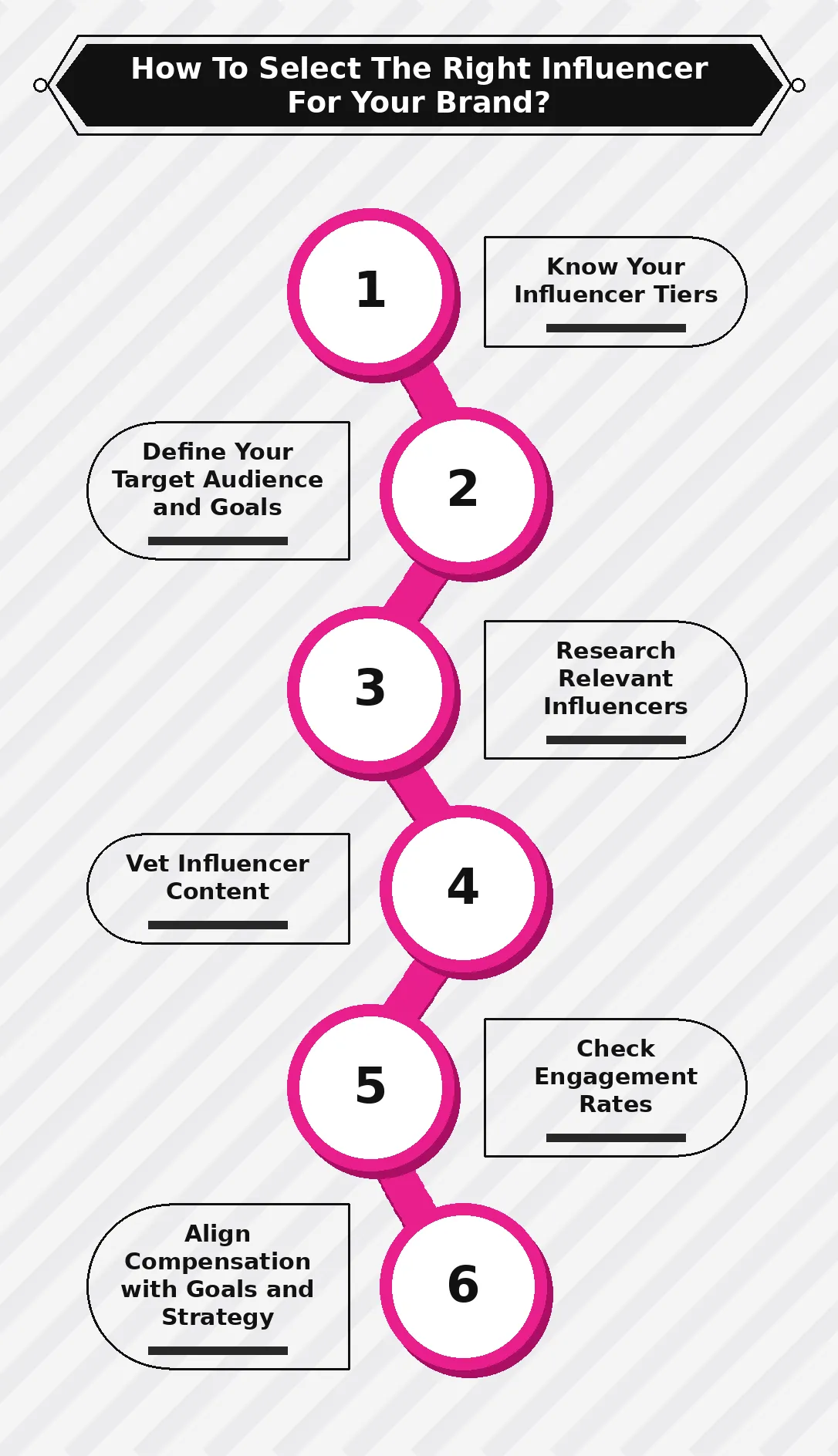
Before you open a single hashtag or platform, get clear on what size of influencer you’re actually looking for. If you want brand awareness, you’ll need reach and will lean toward macro creators. If you want a handful of conversions from people who genuinely trust the recommendation, you want engagement, and nano or micro creators (under 100,000 followers) will get you there faster.
Before you open a single hashtag or platform, get clear on what size of influencer you’re actually looking for. If you want brand awareness, you’ll need reach and will lean toward macro creators. If you want a handful of conversions from people who genuinely trust the recommendation, you want engagement, and nano or micro creators (under 100,000 followers) will get you there faster.
Start with the basics: who are you actually trying to reach? Look at your customers’ age, location, and occupation alongside softer signals like their interests, values, and lifestyle. Together, these build a picture of the kind of person most likely to actually care about your brand.
From there, tools like Aria by Socially Powerful can show you how that audience behaves online:
Most influencer marketing platforms will also show you how closely an influencer’s followers match your audience, down to age, gender, location, language, and how many of those followers are real.
Once you know who you’re looking for, it’s time to go find them. Industry-specific hashtags on Instagram, TikTok, or YouTube are a good starting point, as are your own followers and your competitors’ followers, since niche audiences tend to already be following the right people.
Don’t limit yourself to the obvious platforms either. A Google or YouTube search can turn up credible voices outside the mainstream apps, and niche communities, comment sections, recommendation threads, and Discord servers are often where authentic discussions take place.
Before you commit to anyone, look back through their past collaborations. Have they worked with similar partners before, and did those partnerships feel consistent with who they are the rest of the time?
It’s also worth checking how those partnerships actually performed, not just whether they happened. Look for signs of real, ongoing engagement instead of focusing on a one-off post that went viral once and disappeared.
Finally, don’t forget to focus on the content itself. Is the tone clear and the messaging easy to follow? Are people actually responding to it? And are those followers real people who match your audience, rather than bots or an unrelated fanbase?
Follower count alone doesn’t tell you whether an influencer’s audience is actively engaging with their content, which is what ERF (Engagement Rate by Followers) is for. Add up the average likes, comments, shares, and saves on their posts, divide by their follower count, then multiply by 100. You’ll learn what share of their audience is actively interacting and not just scrolling past.
If you want to judge how a specific post performed rather than the account as a whole, use ERR (Engagement Rate by Reach) instead. It’s the same math, but divided by reach, meaning it accounts for how many people saw the content, not just how many are subscribed.
Defining compensation is the final step of finding influencers. How you sponsor an influencer collaboration should match what you’re trying to achieve, whether that’s gifting product, a flat fee, affiliate commission, or some mix of the three. Get this wrong and you end up with influencers who complete the brief but aren’t especially invested in how it performs.
Start with the goal: brand awareness, traffic, and conversions all call for a different setup. If conversions are the priority, an affiliate or pay-per-sale model ties the incentive directly to results. A hybrid approach, a smaller flat fee plus performance bonuses, tends to work well across the board, since it keeps influencers motivated without making their entire payout dependent on factors outside their control.
Once you’ve settled on a structure, set specific KPIs to measure it against, engagement rate, CTR, or total sales. Always get everything in writing upfront: content rules, usage rights, deadlines, and how performance will be tracked.
Manual research helps you find influencers who feel authentic, especially in niche or local communities. Here’s how to do it on each platform:
1. Everywhere
Set up a Google Alert for your brand name or key industry terms.
2. Instagram
3. TikTok
4. YouTube
5. X (Twitter)
6. Facebook
7. Snapchat
8. LinkedIn
Sourcing the right influencers takes more than a quick search. It means tiering, vetting, checking real engagement, and negotiating compensation that’s tied to results.
As an influencer marketing agency, we use tools like Aria to identify and vet the right creators for your brand, then manage the partnership from outreach through to reporting. Get in touch with Socially Powerful and let’s talk about how we can help.
It depends on your goal: macro creators for reach, nano or micro creators for engagement and trust. Define your audience first, then research through hashtags and tagged posts, and vet each creator’s past collaborations and engagement rate before reaching out.
Yes. Google Alerts, hashtag searches, tagged photos, and browsing your competitors’ followers cost nothing but time, and work especially well for niche or local communities.
Search location-based hashtags and geotagged posts, check local Facebook groups, and try a Google or YouTube search for your city plus your niche. A filtering tool like Aria can also narrow results by location alongside audience match.








30M
IMPRESSIONS
15%
UPLIFT IN SALES
17M
REACH


70M+
IMPRESSIONS
500+
COLLABORATIONS
SOLD OUT
PRODUCT LINES


486%
FOLLOWERS
28M
MENTIONS
13M
VIEWS

35M
VIEWS
3M
ENGAGEMENTS
50+
CREATORS


32M
VIEWS
+400K
NEW FOLLOWERS
2M
LIKES

We'll show you how to start powerful conversation, drive social engagement, build your brand, hit sales targets or meet other goals you have, wherever you are in the world.
Work with us