Written By:
Anastasija Vasilevska
Writer
 PROCUREMENT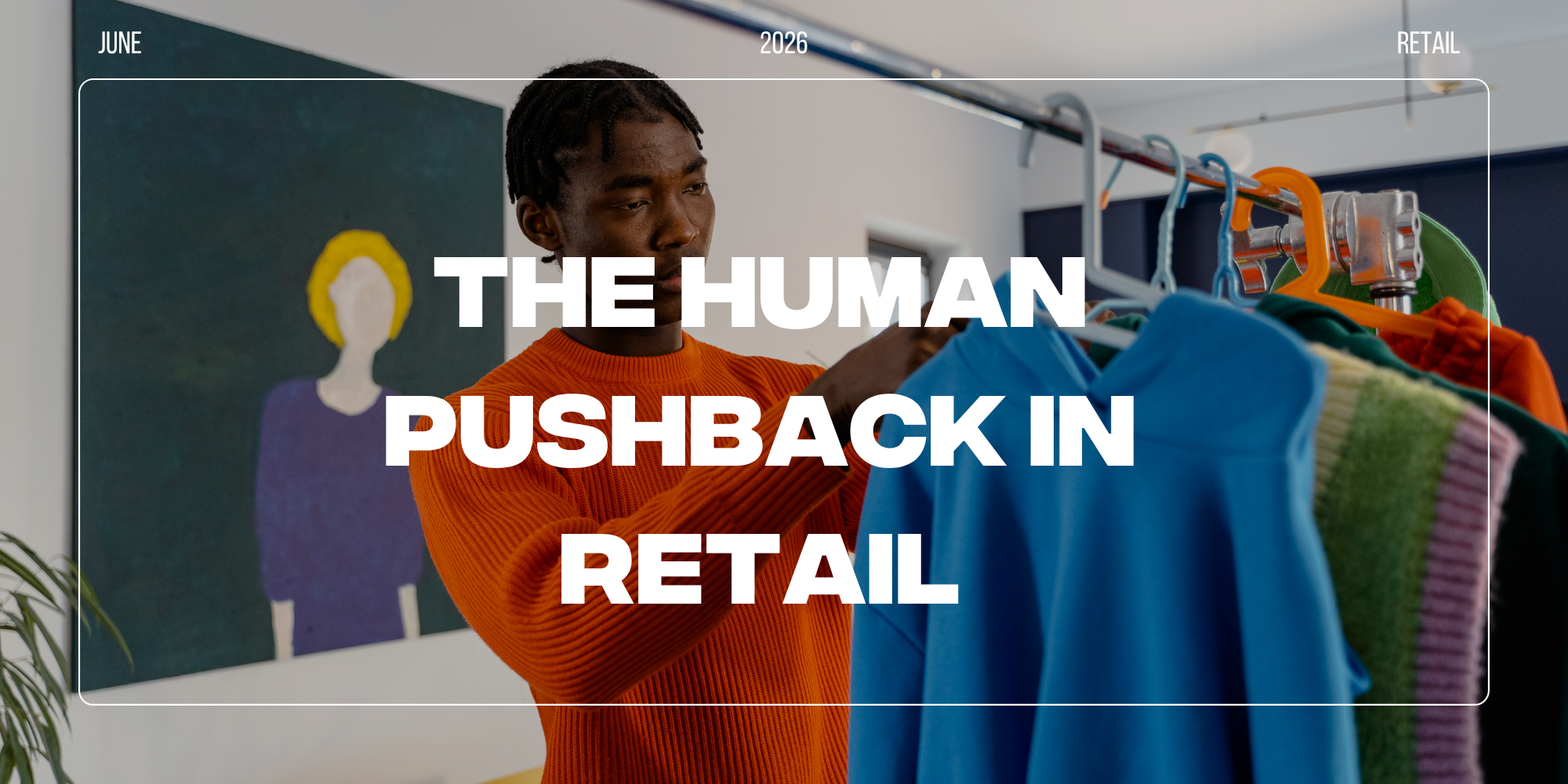



Artificial intelligence is being slowly integrated into the retailer aisle, and consumers have noticed. From the moment you open a shopping app to the instant a recommendation lands in your inbox, AI is working silently behind the scenes, predicting, personalising, and nudging.
For retailers, the promise is extraordinary. For consumers, the reality is more complicated.

Recommendation engines curating what we see before we’ve finished scrolling. Dynamic pricing adjusts in real time based on demand signals we never agreed to share. Chatbots handling the first five minutes of every customer service interaction. Inventory managed by predictive models that often know what a store needs before its manager does.
For brands and retailers, these tools have delivered measurable benefits, such as reduced overstock, higher conversion rates, and more targeted campaigns. For them, the efficiency argument is hard to dispute. But this integration does have a flip side.
Nearly half of consumers (49%) worry about algorithmic bias from AI recommendations, concerned that personalisation could result in discriminatory outcomes, reinforce existing biases, and ultimately limit their exposure to new, diverse products and services. That is not a fringe concern. That is half of shoppers quietly wondering whether the algorithm is working for them or simply narrowing their world.
Consumer sentiment around AI in retail sits in an interesting and telling tension. On one hand, people appreciate convenience, from the saved basket, the remembered size, the “you might also like” that occasionally gets it right, and stepping in as the curator of overwhelming choice. On the other hand, there are growing concerns that can’t be ignored.

When everything is personalised, nothing feels discovered. When a feed is curated to reflect only what you have already shown an interest in, spontaneity disappears. Shopping, which has always carried a social, exploratory, even emotional dimension, starts to feel transactional in a way that leaves people cold. The algorithm optimises for conversion. It does not optimise for delight, for surprise, or for the kind of purchase you did not know you needed until you saw it.
Trust is also a factor. Consumers are becoming more aware of the fact that some AI recommendations are not neutral but serve commercial interests, reflect the biases baked into training data, and exist to maximise engagement rather than satisfaction. That growing literacy is changing expectations.
Here is where things get genuinely interesting… when a dominant force in culture creates friction or discomfort, consumer behaviour tends to move in the opposite direction. We are watching that happen in real time.
Across sectors, there is a measurable or accelerated shift towards the tactile, the handmade, the natural, and the slow. It is not nostalgia, or not only nostalgia. It is a deliberate, considered response to a world that feels increasingly mediated by machines.
The materials people choose are telling. Wood, linen, cotton, stone — natural materials are enjoying a sustained moment that shows no sign of fading. Products that carry the mark of their origin, that age and wear in ways that feel honest, are winning share from their synthetic equivalents. The handmade object, the small-batch product, the thing made by someone with a name. Consumers are willing to pay a premium not just for quality but for provenance, for the story of how something came to be.
This can be seen in recent trends:
This can also be seen in social media consumption patterns, as longer-form content is winning. Across social media, there is a growing appetite for content that takes its time, the considered essay, the long-form video, the newsletter written by a real person with a real point of view (cough*this one*cough).
Audiences are choosing depth, meaning, creators who are willing to go long, to be specific, to sound like themselves rather than an optimised content feed, are building the most loyal communities.
Finally, sustainability is now a baseline expectation. The desire to buy less and buy better, to choose brands with transparent supply chains and genuine environmental commitments, continues to grow. So for the majority of consumers who want to shop more sustainably, the presence of AI in the retail space is concerning, as this seems like the most powerful tool yet for enabling frictionless overconsumption.
The consumer is not rejecting the most recent technological breakthrough. They are assessing their relationship with it. They want the convenience without the coldness, the personalisation that does not feel like surveillance. And increasingly, they want to connect with the brands they buy from.
For marketers, the opportunity is clear. The brands that will earn lasting loyalty in this environment are those that can hold two things at once: the intelligence to use data well, and the humanity to know when to put it down. That means content that sounds like a person wrote it. Products that carry craft and care in their design. Brand stories that are honest about origins and impact, and subsequently, communities built around genuine values.
AI is powerful, and its potential is real, but right now, the execution of its use is fundamental. Get it wrong as a brand, and you don’t just lose a sale, you lose trust and unravel years of brand equity overnight.








30M
IMPRESSIONS
15%
UPLIFT IN SALES
17M
REACH


70M+
IMPRESSIONS
500+
COLLABORATIONS
SOLD OUT
PRODUCT LINES


486%
FOLLOWERS
28M
MENTIONS
13M
VIEWS


35M
VIEWS
3M
ENGAGEMENTS
50+
CREATORS


32M
VIEWS
+400K
NEW FOLLOWERS
2M
LIKES

We'll show you how to start powerful conversation, drive social engagement, build your brand, hit sales targets or meet other goals you have, wherever you are in the world.
Work with us