Written By:
Anastasija Vasilevska
Writer
 PROCUREMENT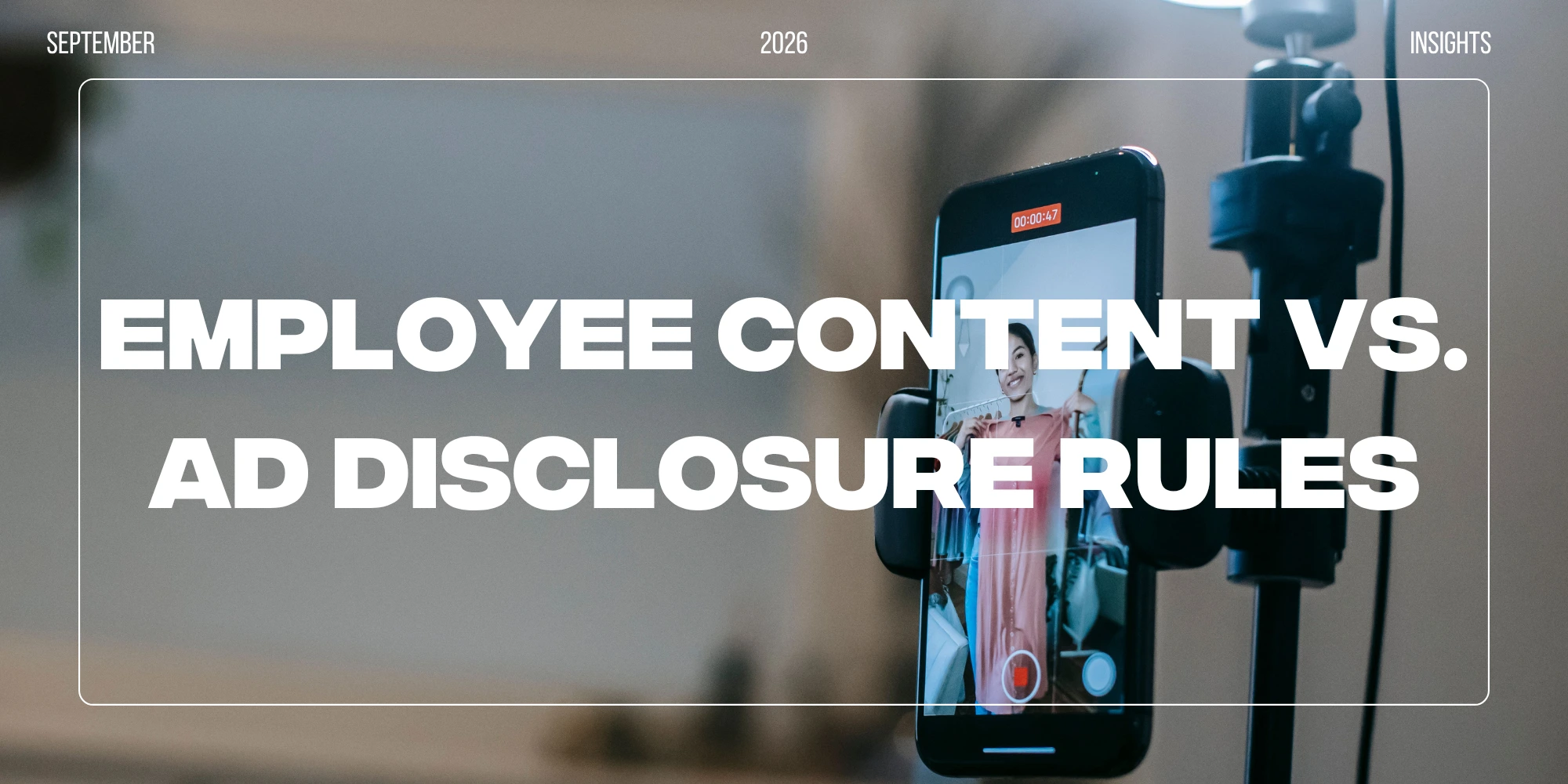



Employee-generated content is everywhere right now. Brands like M&S and Starbucks are actively encouraging staff to post about the products they work with, and on paper, it looks like an easy win.
But a recent LinkedIn post from Daniel E. raised a question we haven’t seen anyone else ask yet: if an employee is paid a salary by the brand they’re posting about, does that commercial relationship mean the content should be disclosed as an ad?
So far, most of the conversation around EGC has focused on how well it performs and how brands can scale it. But almost none of it has asked whether the rules that already exist for paid promotion should apply here too.
So far, most of the conversation around EGC has focused on how well it performs and how brands can scale it. But almost none of it has asked whether the rules that already exist for paid promotion should apply here too.
The rules for disclosure in the UK were built with a clear picture in mind: a creator gets paid, gifted, or given a discount code to post about a product, and that relationship needs to be obvious to anyone reading the post.
The Advertising Standards Authority requires marketing content to be clearly identifiable as advertising, and if a brand and creator fail to disclose that relationship, both are held responsible.
However, there’s an important exception to this. If content is genuinely organic, meaning a business hasn’t taken it and used it as part of its own marketing, the ASA generally won’t get involved. A good example of this is a customer leaving an unprompted review.
That distinction has quietly given EGC a pass. Because employees aren’t being paid specifically to post, and their content often isn’t formally sponsored, it’s been treated as closer to organic content than paid promotion.
The entire reason paid disclosure rules exist is that payment creates a commercial relationship, and that relationship needs to be visible to the audience. A salaried employee already has that relationship. It’s ongoing, it’s financial, and arguably it’s closer than a one-off gifted product.
If a single gifted item is enough to trigger a disclosure requirement, it’s hard to see why a full-time salary from the same brand wouldn’t raise the same question. The honest answer might be that the current rules were written before EGC existed as a formal strategy, not that EGC was deliberately excluded from them.
This question would be interesting on its own, but new food advertising rules in the UK make it urgent rather than academic.
Since January 2026, there’s been a total ban on paid-for online advertising of less healthy food and drink products, often referred to as LHF or HFSS items. The rules apply whenever a commercial relationship exists behind the content, including gifting and incentives.
Brand advertising itself is exempt from this ban, but advertising that features an identifiable product isn’t. This brings us back to Daniel’s post, and those M&S Malt Balls. If a paid influencer posted a photo of that exact product, it would almost certainly break the new ban.
Now compare that to an employee posting the same photo. Because the employee wasn’t specifically paid or gifted for that post, their content currently isn’t covered by the ban at all, even though they have an ongoing financial relationship with the brand (their job) that’s arguably stronger than a one-off gifted item.
EGC has only recently turned into a social strategy that brands actively build and manage. Before that, it was more informal: employees just posting about their jobs on their own.
Regulators mostly act when they see complaints, and so far, most complaints have been about paid influencers. That’s kept EGC off the radar.
The LHF rules add another layer. They only became law in January 2026. An employee posting a specific LHF product is a very new kind of situation, so it hasn’t had time to get tested yet.
This may change very soon. As more brands put out employee content, and as the LHF rules settle in, it’s only a matter of time before a regulator has to weigh in.
Disclosure obligations for employee-generated content aren’t always clear, and rules like the LHF ban can leave a campaign exposed if they’re missed.
Our team at Socially Powerful works through exactly this with brands every day: reviewing campaigns, flagging where disclosure applies, and building creator and employee campaigns you can stand behind.
Get in touch with us, or take a look at our influencer marketing services to see how we can help.
If your brand runs or is considering an employee content campaign, particularly in a regulated category, it’s worth reviewing how that content is being treated before a regulator decides for you.







30M
IMPRESSIONS
15%
UPLIFT IN SALES
17M
REACH


70M+
IMPRESSIONS
500+
COLLABORATIONS
SOLD OUT
PRODUCT LINES


486%
FOLLOWERS
28M
MENTIONS
13M
VIEWS


35M
VIEWS
3M
ENGAGEMENTS
50+
CREATORS


32M
VIEWS
+400K
NEW FOLLOWERS
2M
LIKES

We'll show you how to start powerful conversation, drive social engagement, build your brand, hit sales targets or meet other goals you have, wherever you are in the world.
Work with us