Written By:
Anastasija Vasilevska
Writer
 PROCUREMENT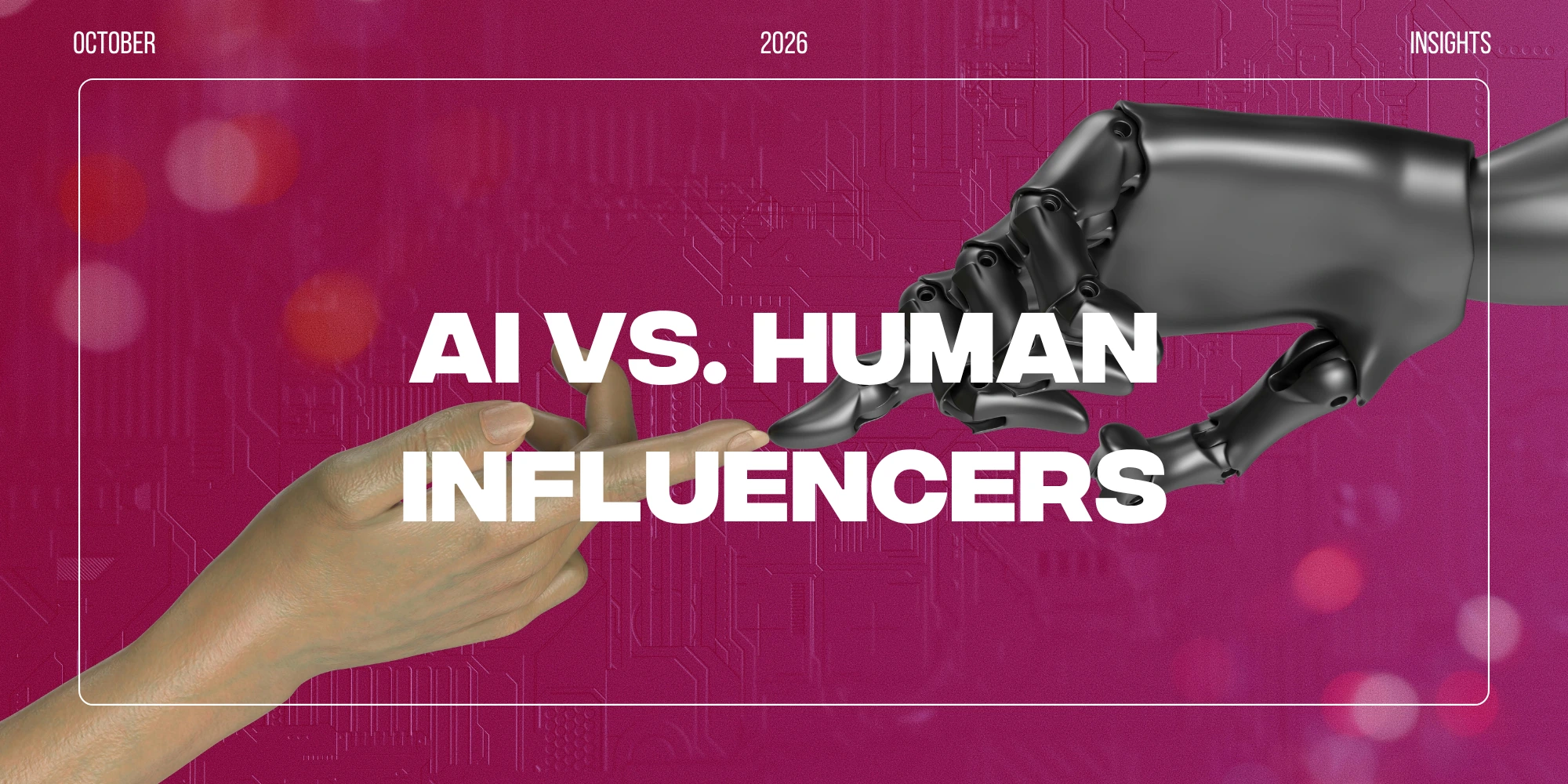



Aitana López has neon-pink hair, over 400,000 Instagram followers, and a fitness feed that reportedly brings in up to €10,000 a month for the agency behind her. She also doesn’t exist.
A Spanish digital agency built her to avoid the usual costs and risks of working with talent, such as scheduling conflicts, fees, and PR problems. That raises a practical question for marketers: does an AI influencer actually drive sales, or is the appeal mostly novelty?
Virtual creators are good at attracting attention and building follower counts. But when a campaign depends on demonstrating a product, earning trust, or turning viewers into buyers, human creators tend to perform better.
An AI influencer, also called a virtual creator, is a character who looks and acts like a social media creator but is made using artificial intelligence. A team behind the scenes decides how the character looks, what they post, and what their personality is like. Because every detail is planned, brands have complete control over how the influencer is presented.
Common examples include:
According to Grand View Research, the global virtual avatar market is expected to grow from $46.3B in 2026 to $270.6B by 2030 as companies bring AI design tools into their marketing operations.
Marketing teams are expected to produce more content on tighter budgets, and AI-generated influencers appeal for a few practical reasons:
The cost savings are real, but AI influencers have a massive blind spot: they struggle once an influencer marketing campaign needs real commercial results:
Virtual creators can draw curiosity on organic posts, but sponsored content performs differently. Twicsy’s research found that human creators earn 2.7 times the engagement of virtual ones on paid posts. People often enjoy AI personas as something to look at, and are less inclined to treat them as a source of shopping recommendations.
An AI character cannot wear a shoe, taste a snack, or try a moisturizer, and audiences know it. Its recommendations carry less weight when a claim depends on firsthand experience.
Many virtual creators are generated from similar underlying models, so they often share the same polished look. On crowded feeds this becomes repetitive, which works against brands trying to appear authentic.
AI tools are faster, but human creators have the advantage in the qualities that influence purchase decisions:
Heavily polished content can feel impersonal. In fact, unscripted reactions and casual, everyday settings often earn better sentiment and retention than highly produced CGI. Small imperfections make creators feel real, and that is part of why audiences keep watching.
Shoppers, especially in fashion and beauty, tend to respond best to creators who feel relatable and seem to use what they recommend. They want to see how a product fits into an ordinary day, whether that’s a skincare routine in a cluttered bathroom or an outfit worn for errands. That everyday context is hard for a virtual persona to offer.
Human creators earn credibility through years of open communication and direct engagement with their communities. A new AI persona starts with no track record, and advertising spend cannot replace that history.
AI influencers offer scale and tight brand control. Human creators offer the trust that leads to sales. For campaigns that rely on audience trust to sell a product, human creators are the stronger choice.
The most practical approach is to use AI to support human creator programs and leave the creators in place. Finding the right creator is often the slowest part of a campaign, which makes discovery one of the most useful places to bring AI in.
That is the step our AI influencer discovery platform Aria was built for. You describe the creator you have in mind in plain language, for example a skincare creator with a particular look, and it returns a shortlist to start from. Choosing, briefing, and working with those creators stays with your team, which leaves more time for building real relationships with them and their audiences.
The accounts and audiences are real, but the personas themselves are computer-generated characters. They post on platforms like Instagram, TikTok, and YouTube and work with brands on sponsorships, virtual modeling, and media campaigns.
Common signs include unnaturally smooth skin, repeating background details, stiff hand positions, and small glitches in video movement. Many platforms and regulators also require disclosure, so virtual creators often label themselves in the caption.
Lu do Magalu, created for Brazilian retailer Magazine Luiza, is the most followed, with more than 9M followers on Instagram. Aitana López and Shudu Gram are also well-known.







30M
IMPRESSIONS
15%
UPLIFT IN SALES
17M
REACH


70M+
IMPRESSIONS
500+
COLLABORATIONS
SOLD OUT
PRODUCT LINES


486%
FOLLOWERS
28M
MENTIONS
13M
VIEWS

35M
VIEWS
3M
ENGAGEMENTS
50+
CREATORS


32M
VIEWS
+400K
NEW FOLLOWERS
2M
LIKES

Aug 20, 2026
Insights

We'll show you how to start powerful conversation, drive social engagement, build your brand, hit sales targets or meet other goals you have, wherever you are in the world.
Work with us