Written By:
Anastasija Vasilevska
Writer
 PROCUREMENT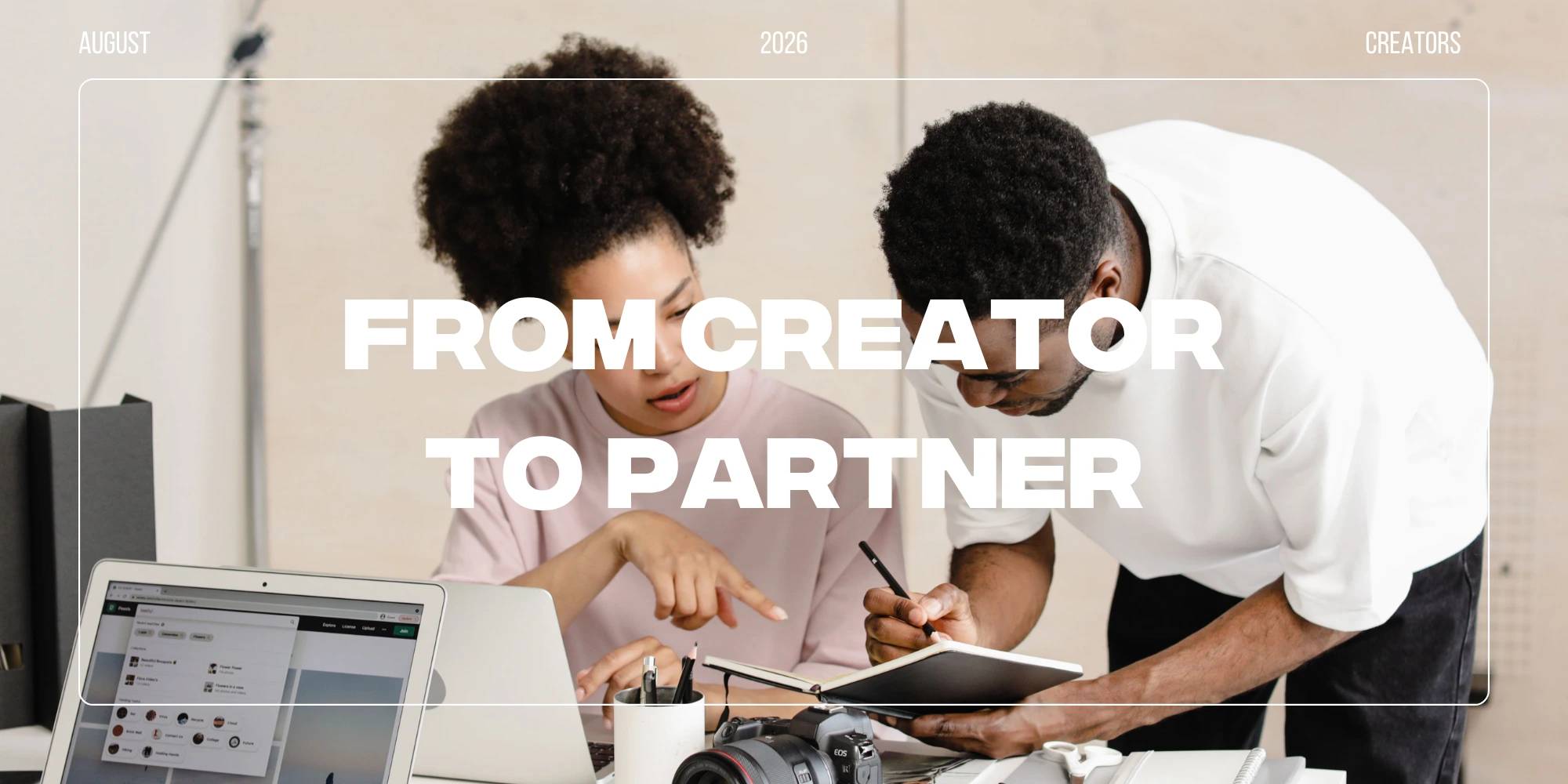


There’s a real difference between putting an influencer on a media plan and actually bringing a creator into the process from the start. That distinction has been on our minds lately: the relationship between brands and creators is shifting from creators as content suppliers to creators as genuine contributors.
And that shift matters more than it might seem at first glance. Industry reporting this year has tracked the same pattern across the wider market: creator partnerships are moving from a line item on a media plan to a seat at the table.
Influencer marketing has mostly worked the same way everywhere: build the campaign, get the assets approved, then bring the creator in to post the finished message. Creators only showed up at the end and delivered content they did not get to shape.
The recent news that Farron Clark is stepping into an insider role at ASOS for 2026 is a great example of what breaking that pattern looks like in practice.
It’s not just another partnership announcement. It’s a sign that creators are moving from the distribution end of the process to the building end of it.
What happens when a creator helps shape the message instead of just delivering it? It points to a healthier direction for the industry, and the data is starting to back that up.
Creator-led content has become significant enough in scale that it’s paying out at a level that rivals traditional media budgets, with YouTube alone having paid creators more than $100 billion since 2021.
Paid budgets are following the same curve. According to the IAB’s 2025 Creator Economy Ad Spend & Strategy Report, US creator ad spend reached $37 billion in 2025, up 26% year-over-year, nearly four times faster than the growth rate of the media industry overall, and is projected to climb to $44 billion in 2026. That’s the clearest signal yet that brands have stopped treating creator spend as a side experiment and started treating it as a real media line item.
The performance case backs this up too. Aspire’s State of Influencer Marketing 2026 report, based on data from over 1,000 marketers and creators, found that brand ambassador programmes delivered the highest ROI of any influencer tactic tracked that year, ahead of one-off posts, seeding, and affiliate deals.
Put simply: the brands treating creators as ongoing partners rather than one-time bookings are seeing the numbers to back it up.
The best creative work tends to happen when brands and creators understand each other well enough to build something they’re both proud of. That kind of understanding doesn’t come from a single campaign brief. It comes from time spent working together, learning each other’s instincts, and building trust.
That said, there are always exceptions. Not every campaign needs or benefits from creators being involved from day one.
Campaigns that run across paid social, organic, PR, retail, out-of-home, and multiple other influencer marketing channels have to work harder than a single influencer post ever could. When content needs to perform across a wide range of business objectives, not just feel authentic within one post, flexibility naturally gets more limited.
That’s why creators can’t always run completely free on these bigger campaigns. That’s fine, as long as the brand puts real thought into what the creator’s role should be instead of just figuring it out as they go.
Not every project calls for the same level of involvement. Sometimes a creator should help shape the concept from the ground up. Other times, they should interpret a brief in their own authentic voice. And sometimes, their job is simply to amplify a campaign that’s already been strategically built out.
What trips a lot of teams up is figuring out which of those fits the moment and actually thinking it through instead of just doing whatever worked on the last campaign.
Plenty of brands will say creators deserve a real say in strategy, but far fewer have really changed how they measure the work to match. If you’re treating a creator as a media channel, their content needs to be held to the same standard as any other paid placement.
Without that, “creators as strategic partners” stays a talking point rather than a practice. The ones actually doing it are factoring creator spend into their regular media budget and measurement, instead of keeping it in its own smaller line that’s easy to question and easy to cut.
We’ve watched this shift happen in real time with our own clients, and it tracks with what the wider industry is reporting. Our Beauty Brand Social Index shows that the brands still growing right now are the ones leaning into creator-led activity on TikTok, not the ones relying on their own channels for growth.
“I think the industry still talks about creators like they’re a media format, and that’s where it gets it wrong. A creator is building something with their name on it, their reputation, their audience’s trust, in real time, in public. That’s not content. That’s a life’s work playing out in the comments section,” says James Hacking, the founder of Socially Powerful.
“When we walk into a partnership treating it like a booking, we’re missing the actual person who has more on the line than the brand does. The partnerships I’m proudest of are the ones where we stopped asking a creator to say our line, and started asking what they’d risk their own credibility to say. That’s when the work stops feeling like marketing and starts feeling true.”
ASOS trying something different is genuinely exciting, and it feels like a step in the right direction for the industry as a whole. At the same time, it’s worth being careful not to flatten this into a simple rule that says creators must be involved earlier for the work to be good. The nuance matters, and the data backs up why it’s worth getting right: better-integrated creator partnerships aren’t just more authentic, they measurably outperform the alternative.
Creators are becoming more than a media channel. They’re becoming part of how brands think. The real challenge ahead isn’t proving that integration is a good idea; the numbers already do that. It’s making sure that integration is strategic, not symbolic.







30M
IMPRESSIONS
15%
UPLIFT IN SALES
17M
REACH


70M+
IMPRESSIONS
500+
COLLABORATIONS
SOLD OUT
PRODUCT LINES


486%
FOLLOWERS
28M
MENTIONS
13M
VIEWS


35M
VIEWS
3M
ENGAGEMENTS
50+
CREATORS


32M
VIEWS
+400K
NEW FOLLOWERS
2M
LIKES

We'll show you how to start powerful conversation, drive social engagement, build your brand, hit sales targets or meet other goals you have, wherever you are in the world.
Work with us